Literarisches & Journalistisches

Character.ai wurde als Plattform für KI-Gefährten populär, aber auch zum Ziel einer Serie von Klagen. Nun meldet das Unternehmen Insolvenz an.

Stop worrying about my AI, says multibillionaire Sam Altman. So we bear the risks and he keeps the money | Chris Stokel-Walker
06. Oktober, 2026OpenAI’s CEO seems to want to privatise his company’s huge financial gains while making all of us pay for any negative consequences, says author Chris Stokel-Walker

AI weapons systems are already here. Algorithms must not decide who lives and dies | Kenneth Roth
02. Oktober, 2026Israel’s conduct in Gaza shows the danger of using AI in warfare. Humans must remain at the center of wartime decisions

Why Europe has been absent from the great AI safety debate
18. September, 2026Though Europe has measures that address how consumers might encounter AI, technology will impact them if the worst scenarios bear
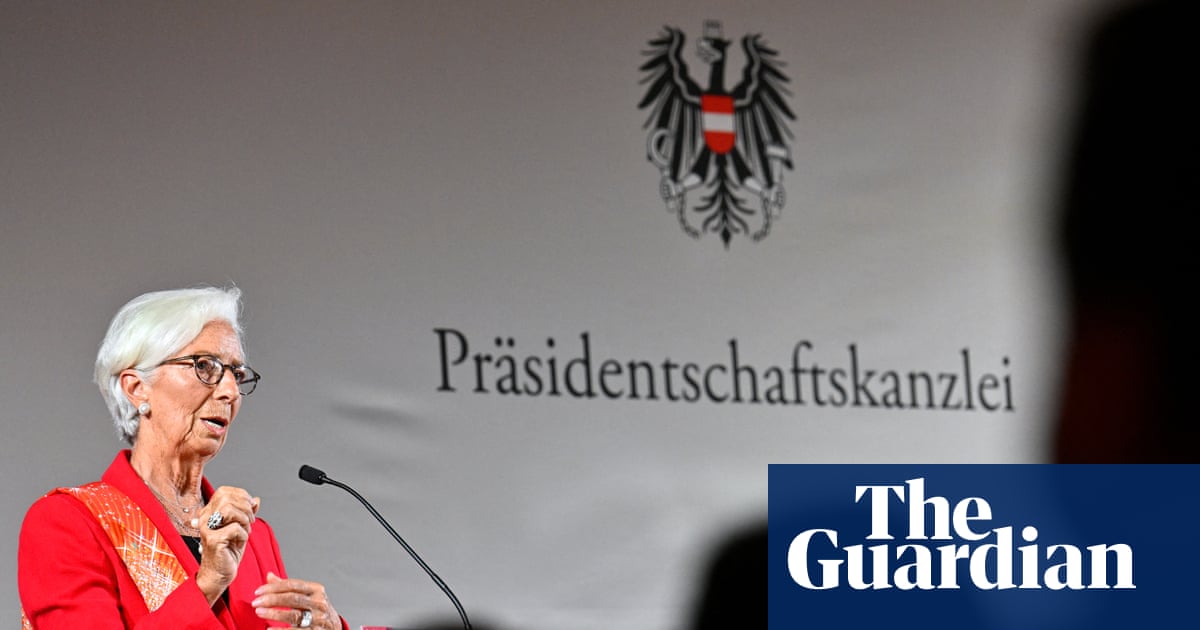
Europe must build own AI or risk getting cut off by US or China, says ECB’s Lagarde
14. September, 2026Central bank chief says continent’s AI dependency could give trade partners unprecedented leverage in negotiations

OpenAI agents discussed ways to escape their sandbox on public wiki
05. September, 2026In all, 3,700 internal agents posted 18,000 messages discussing cheating on a test.

The AI Hater's Manifesto
25. August, 2026In case you are looking for a cynical way of discussing the current LLM hype: LLMs are an interesting and occasionally very useful software technology that has been inflated into a supposed civilization-changing revolution because the tech industry desperately needs another enormous growth story—and the economic, intellectual and social costs of that inflation vastly exceed what the technology currently delivers.
SimPolitics by Fenwick McKelvey: The failed attempts to solve political challenges with computers
11. August, 2026For more than six decades, the public has been promised that computers will revolutionize politics, both nationally and internationally. In SimPolitics, Fenwick McKelvey traces the entwined history of politics and computers from the 1960s to the late 1980s. The eBook is now available for free: http://direct.mit.edu/books/oa-monograph-pdf/2608436/book_9780262053211.pdf

Im kalifornischen Silicon Valley versprechen Tech-Milliardäre wie Elon Musk und Peter Thiel Fortschritt, höhlen dabei jedoch die Demokratie und deren Institu...

A Social Democrat's guide to Magnifica Humanitas - Foundation for European Progressive Studies
25. Juni, 2026In the crowded field of AI ethics, few documents dare to name the enemy. Magnifica Humanitas – the recent encyclical of Pope Leo XIV – does exactly that. While its theological scaffolding may seem distant from secular Social Democracy, its core diagnosis and prescriptions are remarkably, even startlingly, aligned with the values of Democratic Socialism.

„Die Republik“ setzt sich gegen Palantir durch
16. Juni, 2026Palantir kassiert vor einem Handelsgericht in der Schweiz eine Niederlage. Der US-Konzern wollte nach kritischer Berichterstattung der „Republik“ eine Gegendarstellung erreichen. Das Gericht urteilte jedoch, dass die Darstellung der Tatsachen weitestgehend korrekt sei.

KPMG’s study is the latest in a number of apparent AI hallucinations in reports by professional services firms.

Berlin arbeitet mit KI. Die Frage ist nicht mehr, ob solche Systeme in der Verwaltung ankommen, sondern wer ihren Einsatz steuert. Die Reihe „Berlin digital handlungsfähig machen“ greift vier Felder auf, an denen sich entscheidet, wie digitale Lösungen im Alltag der Verwaltung verlässlich eingesetzt werden können. Den Anfang macht der Umgang mit Künstlicher Intelligenz in der Verwaltung.
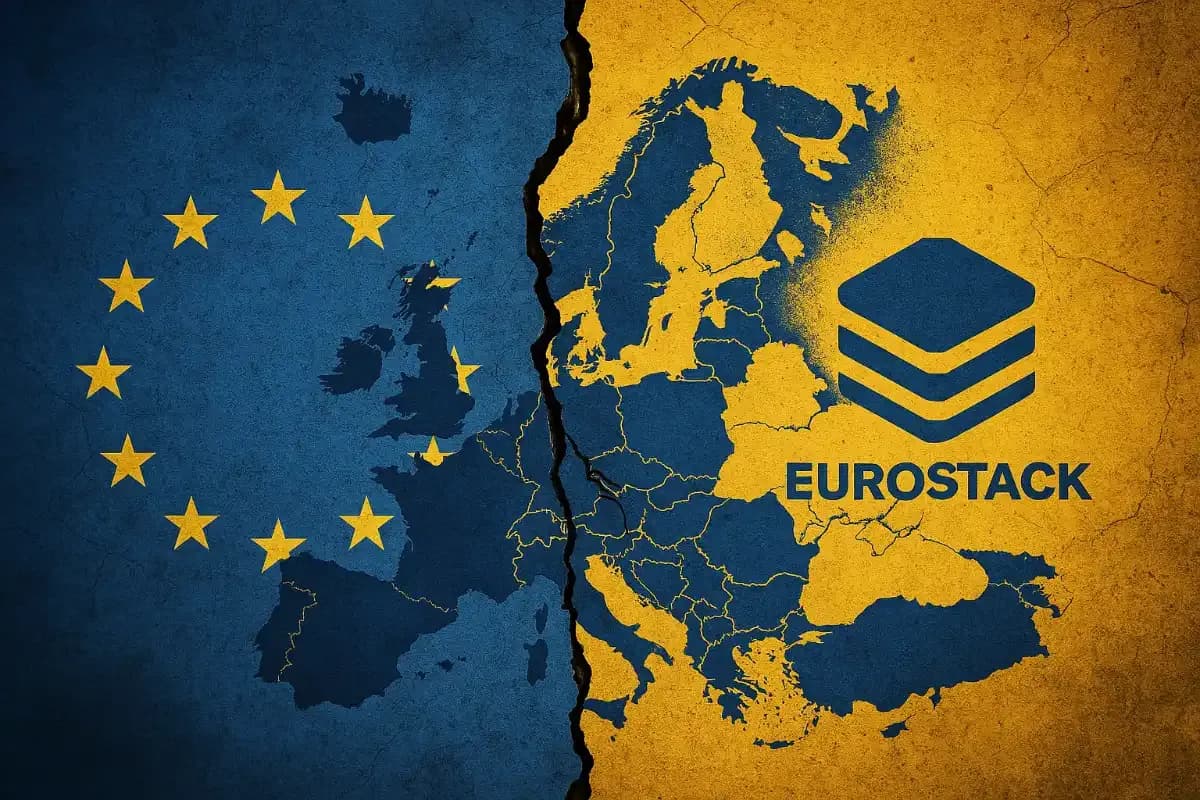
Eight principles for building the European Social Web
07. Juni, 2026The European Social Stack initiative, founded by #SaveSocial (Germany) and the Newsmast Foundation (UK), has established eight principles according to which a European social network should be organized.
Acemoglou: The danger to democracy from AI
05. Juni, 2026Nobelprize Winner Acemoglou shows the danger to democracy from AI in his piece on Automation and Repression. In this article their conclusion is that, starting in a democracy, capital accumulation and thus greater automation encourages the capitalists to support a coup against democracy and set up a repressive system.

Die deutsche Obsession des Alex Karp
03. Juni, 2026Der Palantir-Mitgründer Alex Karp inszeniert sich als Habermas-Erbe. Ein Blick in seine eigenen Texte zerlegt die Maske. Deutsche Redaktionen sollten aufhören, die Maskerade mitzuspielen.

China, the U.S., Russia and others have ramped up their contest over artificial-intelligence-backed weapons and military systems. The buildup has been compared to the dawn of the nuclear weapons age

Fractured reality: How democracy can win the global struggle over the information space
09. April, 2026The report examines the evolving impact of digital technologies on European democracy. In an era of a global struggle to control the information space, this report offers critical insights into the fracturing of perceived realities, the rise of the ”fantasy-industrial complex,” and the systemic risks posed by the attention economy. It exposes how platforms algorithmically prioritise engagement over accuracy, reinforcing ideological echo chambers and amplifying mis- and disinformation that erode democratic resilience. The report highlights how structural incentives and foreign control of the most important players in the information space undermine information integrity, collective knowledge and civic discourse. In response, the report presents a number of recommendations from fostering alternative public spaces and crowd-sourced knowledge systems to reforming business models, restoring user agency, and advancing EU digital sovereignty through decentralised infrastructure.


After Minneapolis, tech leaders’ deference to Donald Trump must end.

10 Regeln für die Digitale Welt
01. Januar, 2026In der Überzeugung, dass - die Anerkennung der Würde und des Wertes der menschlichen Person, ihrer kreativen und ethischen Potentiale und ihrer Gabe, die Zukunft schöpferisch zu gestalten, die Grundlage des gerechten, friedlichen und demokratischen Zusammenlebens freier Subjekte ist; - die Nichtanerkennung dieser Werte und Potentiale zugunsten eines blinden Fortschrittsglaubens und eines deterministischen Weltbildes eine Haltung des Fatalismus und der Resignation befördert, die die Zukunft unseres Planeten sowie das zivilisierte Zusammenleben zwischen Menschen gefährdet; - wir alle Verantwortung für das gute Leben tragen und über die Gabe verfügen, uns darüber in Rede, Gewissens- und Glaubensfreiheit offen zu verständigen; - moderne Technologien uns viele geeignete Mittel an die Hand geben, dies auf kluge und gerechte Weise zu tun;

Laplacescher Dämon
15. Dezember, 2025Der Laplacesche Dämon ist die Veranschaulichung der erkenntnis- und wissenschaftstheoretischen Auffassung, nach der es im Sinne der Vorstellung eines geschlossenen mathematischen Weltgleichungssystems möglich ist, unter der Kenntnis sämtlicher Naturgesetze und aller Initialbedingungen wie Lage, Position und Geschwindigkeit aller im Kosmos vorhandenen physikalischen Teilchen jeden vergangenen und jeden zukünftigen Zustand zu berechnen und zu determinieren. Nach dieser Aussage wäre es theoretisch möglich, eine Weltformel aufzustellen.
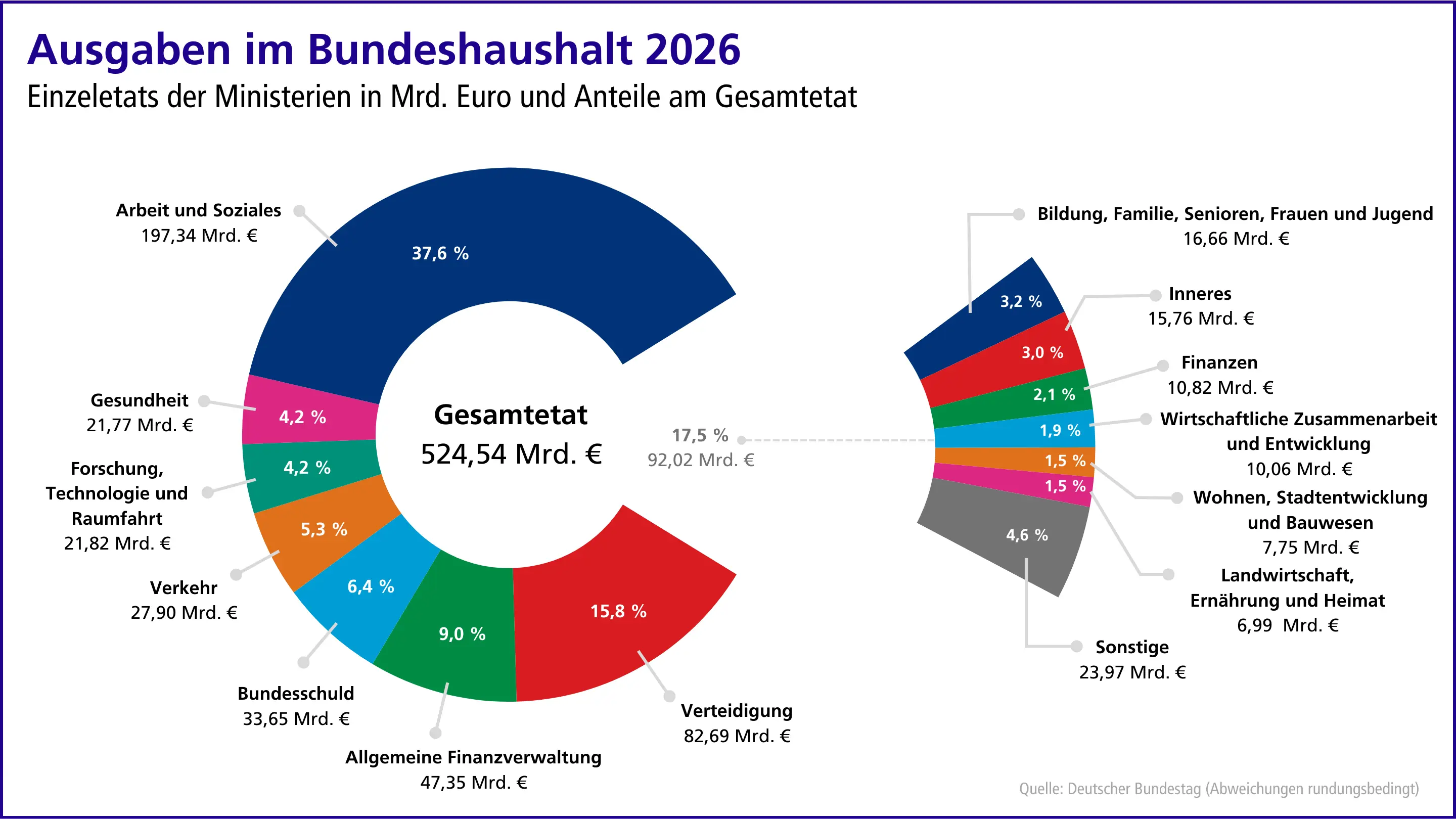
Analyse und Kommentierung des Haushalts 2026 mitFokus auf den Etat des Bundesministeriums für Digitalesund Staatsmodernisierung (BMDS)
24. November, 2025Die Agora Digital Transformation hat im Jahr 2025 eine Berechnung der Digitalaus- gaben des Bundes vorgelegt. Hierzu wurde der gesamte Haushalt 2024 (und zusätzlich noch die Jahre 2019, 2021 und 2023) ausgewertet, um Digitalausgaben ressortübergreifend zu identifizie- ren und unterschiedlichen Ausgabenkategorien (Infrastruktur, Verwaltungsdigitalisierung, For- schung & Innovation, etc.) zuzuordnen.1 Ohne Berücksichtigung der Verteidigungsausgaben ha- ben wir für 2024 Digitalausgaben von 19,1 Mrd. Euro Digitalausgaben auf Bundesebene berech- net. Wir werden unsere Zusammenarbeit mit dem ZEW – Leibnitz-Zentrum für europäische Wirt- schaftsforschung fortsetzen und planen im Frühjahr 2026 unsere Analyse zu den Digitalausga- ben des Bundes zu veröffentlichen. In unsere Analyse werden wir das Sondervermögen für Infra- struktur und Klimaneutralität miteinbeziehen.

Meta soll Studie zu psychischen Schäden vertuscht haben
23. November, 2025Weniger Depression, Angst, Einsamkeit, schon nach einer Woche Social-Media-Abstinenz: Das geht laut Gerichtsakten aus einer Studie hervor, die Meta abgebrochen hat. Der Konzern weist die Vorwürfe zurück.

Die politische Integration Europas ist so überlebenswichtig wie nie. Und sehr unwahrscheinlich. Eine bittere Bilanz von Jürgen Habermas.